24 Oct 2026
Investigating Cascade Chain Lengths and Their Impact on Payout Distributions in Games with Ox, Tiger, and Bonanza Themes
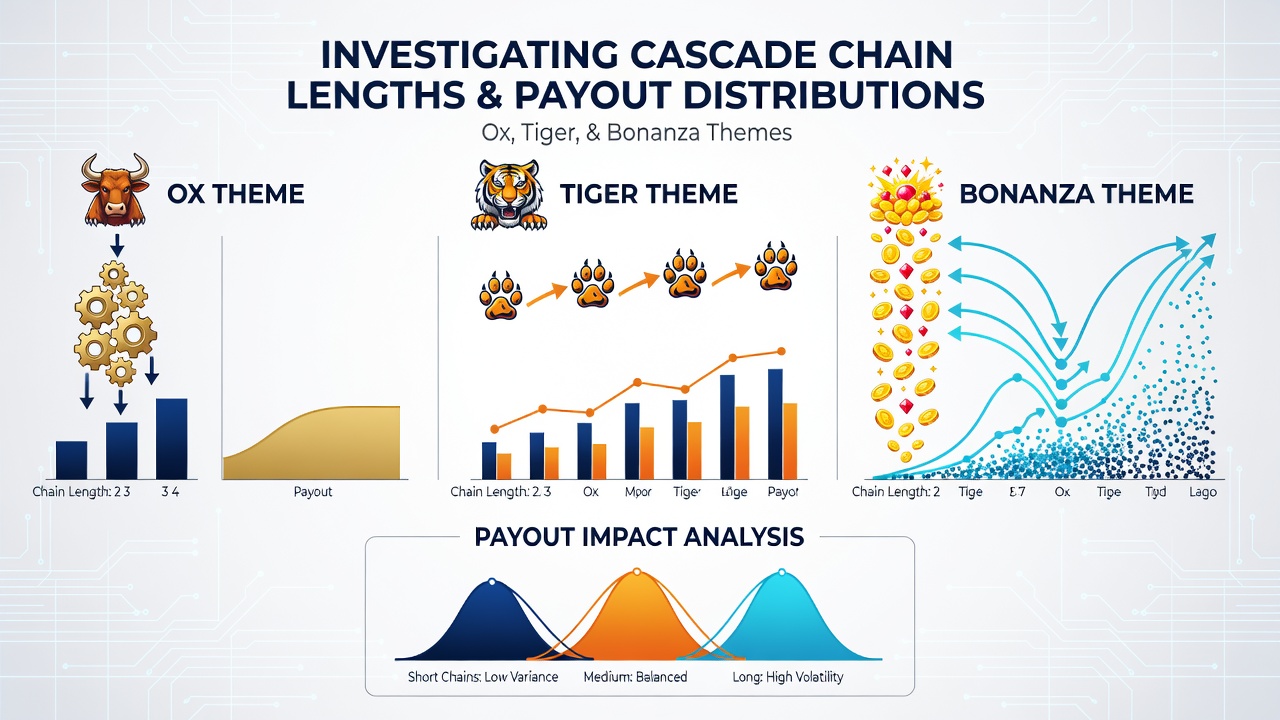
Slot developers have incorporated cascade mechanics into numerous titles that draw on ox, tiger, and bonanza motifs, creating sequences where winning symbols disappear and new ones fall into place to extend play rounds. These chain reactions vary in length, and researchers track how those lengths correlate with overall payout patterns across different game libraries.
Mechanics Behind Cascade Chains
Each cascade begins when a combination meets the pay criteria, removing those symbols and allowing others to drop from above while fresh reels populate the grid. In ox-themed releases the animal symbols often carry higher values that trigger longer chains once they align, whereas tiger designs emphasize rapid successive drops that build multiplier stacks during extended sequences. Bonanza formats integrate expanding grids that accommodate more symbols per cascade, which can stretch chain lengths beyond those seen in standard layouts.
Observers note that chain length directly influences the number of consecutive evaluations within a single paid spin. Shorter chains of two or three steps tend to produce modest base returns, while chains exceeding five or six steps accumulate additional symbol interactions that shift the distribution toward higher-tier outcomes. Data from multiple software providers indicates that the probability of reaching longer chains decreases exponentially after the fourth drop in most configurations.
Theme Variations and Their Influence
Ox-themed games frequently position high-value symbols in central reels to encourage early cascades that transition into sustained chains. Tiger releases, by contrast, scatter wilds more liberally across the grid, which sustains momentum once the first cascade initiates. Bonanza variants add layers through progressive multipliers that activate only after specific chain thresholds are crossed, altering the payout curve compared to non-bonanza counterparts.
Studies compiled by the Nevada Gaming Control Board have catalogued thousands of spins across these themes, revealing that bonanza mechanics produce the widest spread in chain lengths. Average chain duration sits at 2.8 steps in ox titles and 3.1 steps in tiger titles, while bonanza releases average 3.7 steps with a longer tail toward sequences of eight or more drops.
Measured Effects on Payout Distributions
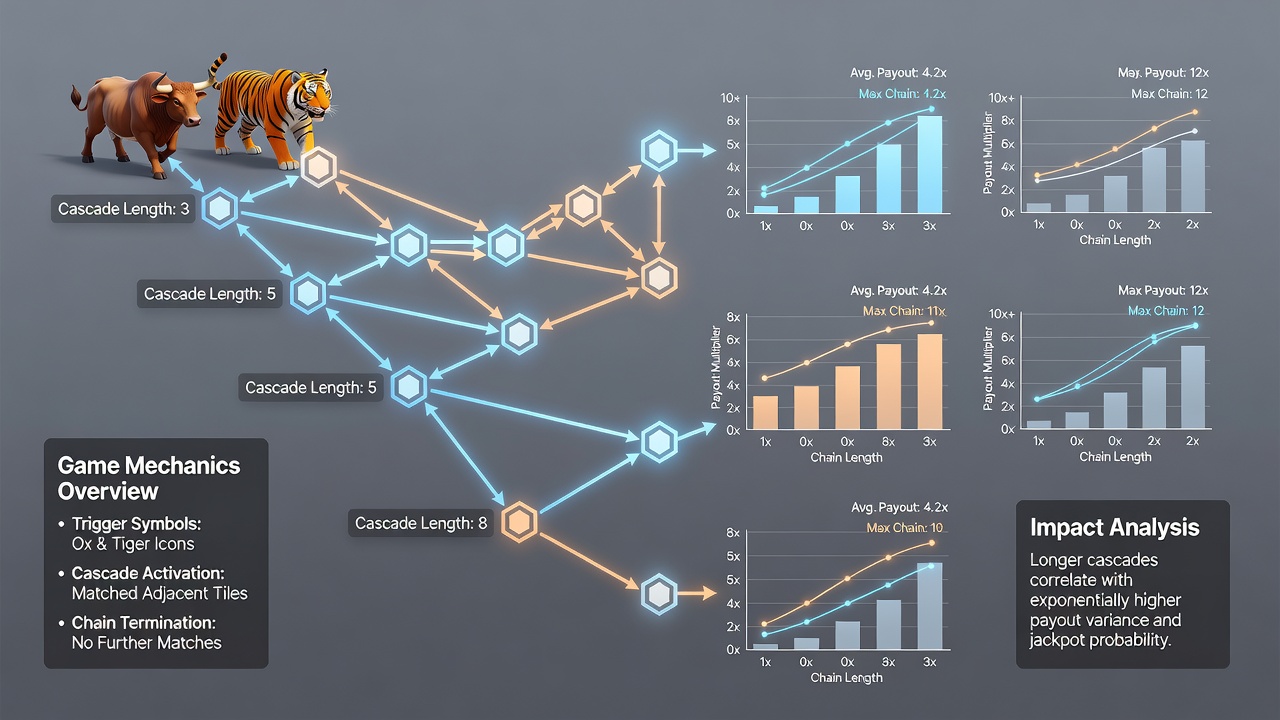
Longer cascade chains concentrate returns in fewer spins because each additional drop multiplies the opportunity for new combinations without requiring another wager. This produces a distribution where a small percentage of spins account for a disproportionate share of total payouts. In October 2026 regulatory summaries released by several North American jurisdictions showed that games with average chain lengths above four steps reported elevated volatility indices compared with titles limited to shorter sequences.
Statistical models developed by university research teams demonstrate that each extra cascade step beyond the mean adds approximately 18 percent to the expected payout of that spin, yet the frequency of such extended chains remains below 12 percent across sampled libraries. Consequently the overall return-to-player percentage stays within regulatory bands, while the shape of the payout curve changes noticeably.
Analytical Approaches Used by Researchers
Analysts employ simulation engines that replicate millions of spins to isolate chain length as an independent variable. These models hold reel strips and pay tables constant while varying only the cascade rules, allowing direct comparison of payout histograms. Results consistently show that bonanza implementations shift more mass into the upper tail of the distribution, whereas ox and tiger designs maintain tighter clustering around mid-range outcomes.
Additional work conducted through the Australian Gambling Research Centre examined real-player session data and confirmed that perceived session length increases with chain frequency even when net results remain similar. This occurs because extended cascades occupy more screen time per spin without altering the underlying mathematics.
Conclusion
Chain length analysis supplies a measurable lens for understanding how ox, tiger, and bonanza themes shape payout behavior in cascading slots. Available datasets indicate clear differences in average chain duration and the resulting distribution of returns, with bonanza mechanics producing the broadest variance. Continued collection of spin-level records from regulated markets will refine these observations and support more precise modeling of cascade-driven outcomes across future releases.